Northern Thailand is far more than just Chiang Mai. Seven provinces — Chiang Mai, Chiang Rai, Lampang, Lamphun, Mae Hong Son, Nan and Phrae — make up one of Southeast Asia's richest cultural and natural regions. For retirees living in Chiang Mai, these neighboring provinces offer a lifetime of weekend trips, cultural discoveries and natural escapes, all within a few hours' drive.
Tourist Map of Northern Thailand: 7 Provinces
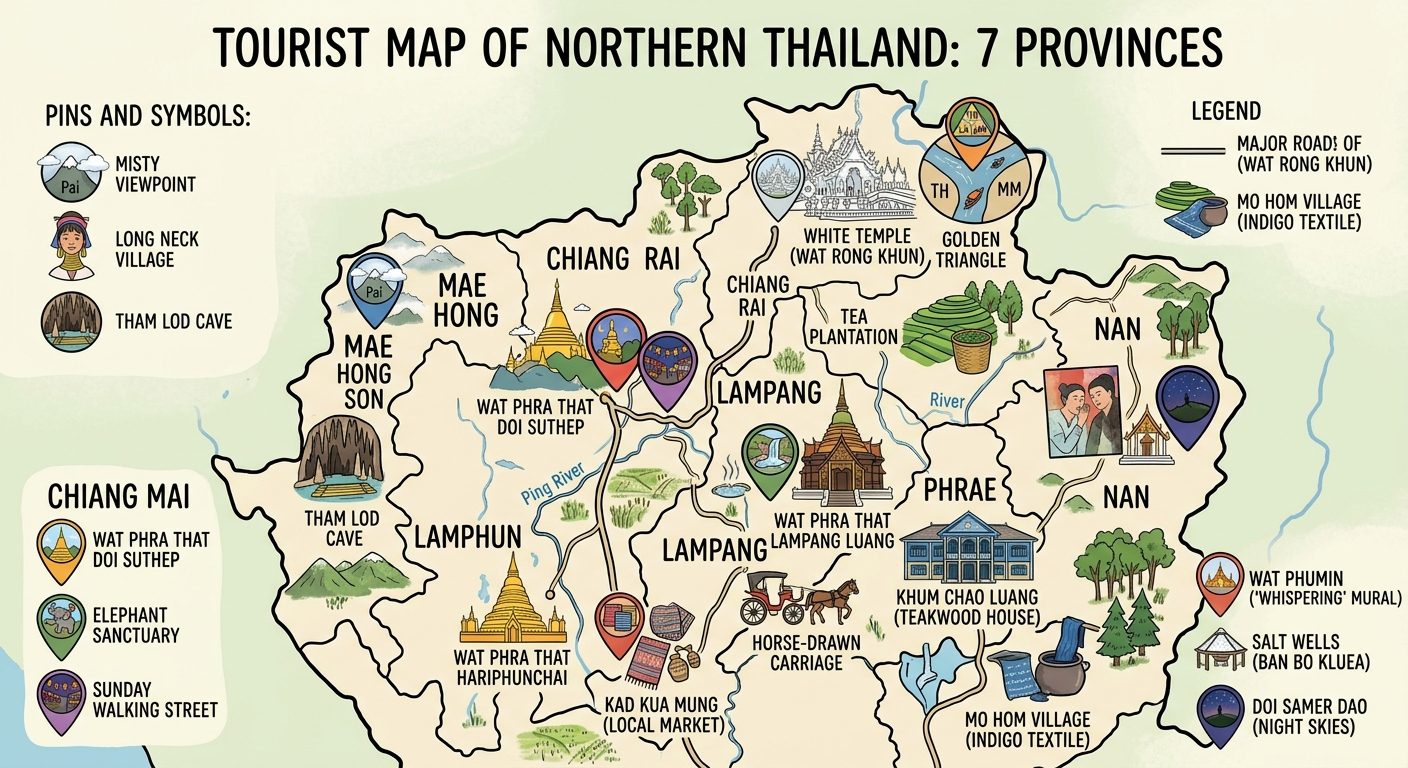
This illustrated map shows the major attractions across all seven Northern Thai provinces — from the misty mountains of Mae Hong Son to the ancient murals of Nan, and from the White Temple of Chiang Rai to the horse-drawn carriages of Lampang.
Chiang Mai Province — The Cultural Heart
As the former capital of the Lanna Kingdom, Chiang Mai is the anchor of Northern Thailand. Over 300 temples within the old city walls, the sacred Wat Phra That Doi Suthep on the mountainside above, the famous Sunday Walking Street market, ethical elephant sanctuaries in the Mae Taeng valley, and Thailand's highest peak at Doi Inthanon — all within the province. For retirees, Chiang Mai offers the rare combination of cultural depth, modern amenities and natural beauty that makes it the region's top retirement destination.
Chiang Rai Province — Art, Tea & the Golden Triangle
Two to three hours northeast of Chiang Mai, Chiang Rai is famous for its extraordinary temple architecture. The White Temple (Wat Rong Khun) is a surreal, glittering masterpiece of contemporary Buddhist art. The Blue Temple (Wat Rong Suea Ten) and the Black House (Baan Dam Museum) complete an artistic trinity found nowhere else. The province's highland tea plantations produce some of Thailand's finest oolong, and the Golden Triangle — where Thailand, Myanmar and Laos meet — offers dramatic river scenery and cultural history. Many Chiang Mai retirees make Chiang Rai a regular weekend destination.
Lampang Province — Horse Carriages & Ancient Temples
Often called "the Chiang Mai of 30 years ago," Lampang retains a slower, more traditional pace. It is the only city in Thailand where horse-drawn carriages still serve as regular transport. Wat Phra That Lampang Luang is considered one of the finest examples of Lanna temple architecture in existence — a wooden complex dating to the 15th century with extraordinary murals. The Khum Chao Luang teakwood mansion showcases Northern Thai aristocratic life. Lampang is an easy day trip or overnight from Chiang Mai.
Lamphun Province — Lanna Heritage & Longan Orchards
Thailand's oldest continuously inhabited city lies just 30 minutes south of Chiang Mai. Wat Phra That Hariphunchai, with its massive golden chedi, is one of the most revered temples in Northern Thailand. Lamphun's longan orchards produce the region's signature fruit (the annual Longan Festival in August is a local highlight), and the province's quiet countryside offers peaceful cycling and rural exploration close to the city.
Mae Hong Son Province — Mist, Mountains & Minorities
The most remote and mountainous of the Northern provinces, Mae Hong Son borders Myanmar and feels like a different country entirely. Pai — a small mountain town roughly three hours from Chiang Mai — has become a beloved getaway for its canyon viewpoints, hot springs, waterfalls and bohemian café culture. Tham Lod Cave is one of Thailand's most spectacular cave systems, and the province's Karen, Shan and Lisu hill-tribe villages offer genuine cultural encounters. The journey via the winding Route 1095 — with over 700 curves — is an adventure in itself.
Nan Province — Murals, Mountains & Night Skies
Nan is Northern Thailand's hidden gem — a quietly beautiful province that sees few foreign visitors. Wat Phumin's famous "Whispering" mural is an icon of Thai art. The salt wells of Bo Kluea, high in the mountains, have been producing salt for over 200 years. Doi Samer Dao offers some of the best stargazing in the country, and the Mo Hom Village preserves traditional indigo textile dyeing. For retirees who value authenticity over tourism, Nan rewards the three-hour drive from Chiang Mai many times over.
Phrae Province — Teakwood Heritage
Phrae was once the center of Northern Thailand's teak logging industry, and its legacy survives in beautifully preserved teakwood mansions and traditional Mo Hom (indigo-dyed cotton) workshops. The province is compact and easy to explore in a day trip combined with Nan. Khum Chao Luang and Vongburi House are stunning examples of Thai-European fusion architecture from the teak boom era.
Tourist Map of Chiang Mai City
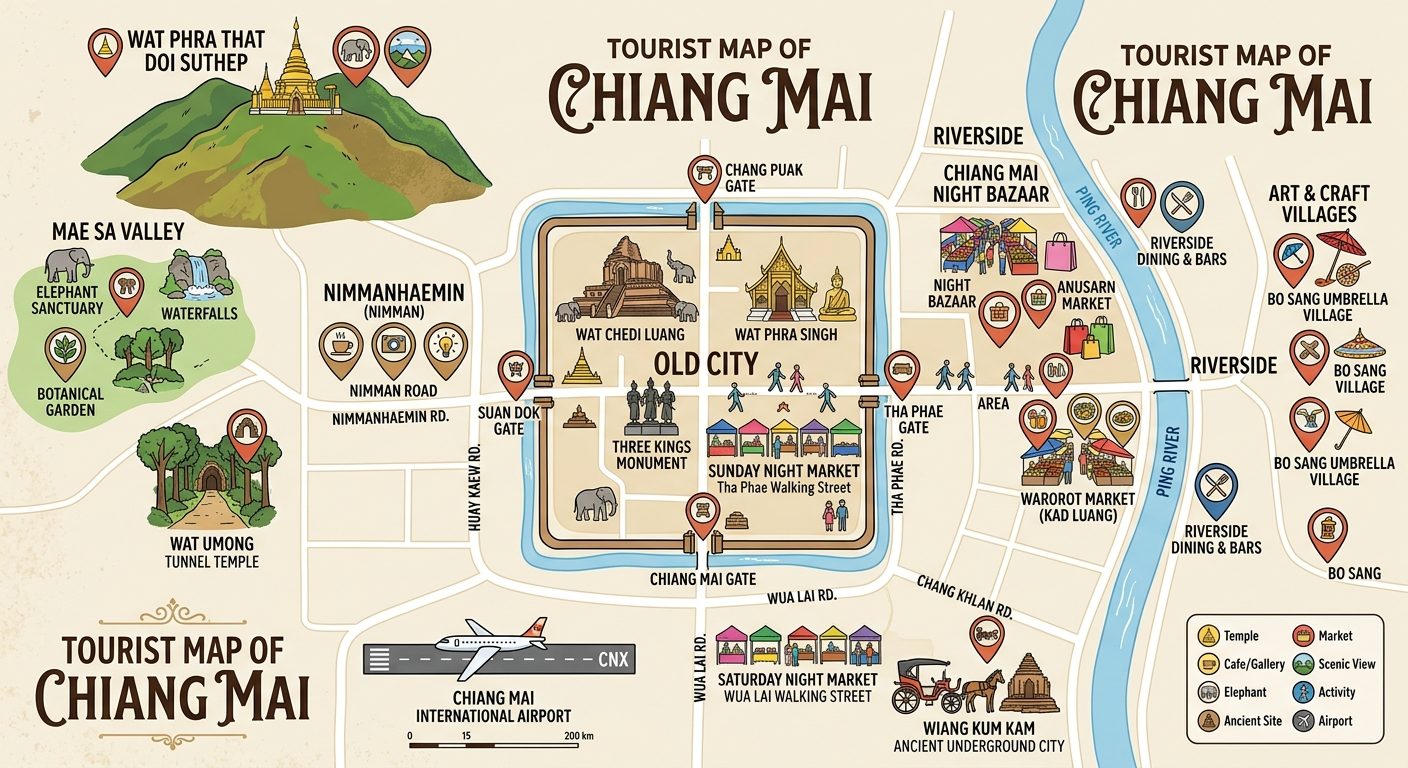
For day-to-day life, this detailed map of Chiang Mai city shows the key neighborhoods, temples, markets, gates and attractions that retirees encounter most frequently — from the moated Old City and the hip Nimman area to the riverside dining district and the famous Walking Street markets.
Chiang Mai Neighborhoods for Retirees
Old City (within the moat) — The historic heart, surrounded by remnants of the ancient wall and moat. Temples on every corner, the Sunday Walking Street market, Three Kings Monument, and a peaceful atmosphere despite being the cultural center. Popular with retirees who want to walk everywhere and immerse themselves in Lanna heritage.
Nimmanhaemin (Nimman) — The modern, trendy district west of the Old City. Specialty coffee shops, boutique restaurants, art galleries, co-working spaces and the MAYA and One Nimman shopping centers. Popular with retirees who want a contemporary urban lifestyle with international dining options.
Riverside Area — Along the Ping River east of the Old City. The Night Bazaar, Anusarn Market, riverside restaurants and bars, and Warorot Market (Kad Luang) — the city's oldest and most authentic fresh market. A good base for retirees who enjoy evening walks and market culture.
Mae Sa Valley — North of the city toward Doi Suthep. Elephant sanctuaries, waterfalls, botanical gardens, Wat Umong tunnel temple, and a quieter, greener environment. Ideal for nature-loving retirees willing to trade city convenience for mountain proximity.
Bo Sang & San Kamphaeng — East of the city, famous for handmade umbrella and parasol craftsmanship, silk weaving, lacquerware and celadon pottery. The art and craft villages here offer a glimpse into traditional Northern Thai artisan culture.
Day Trips from Chiang Mai
One of the great advantages of basing your retirement in Chiang Mai is the accessibility of the surrounding provinces. Lamphun is 30 minutes away. Lampang is 90 minutes. Chiang Rai and Pai are each about three hours. Even Nan, the most distant of the seven provinces, is reachable in a comfortable half-day drive. Many retirees plan monthly excursions to different provinces, discovering new temples, markets, landscapes and communities throughout the year — there is always somewhere new to explore.
Want to explore Northern Thailand with expert guidance? We plan scouting trips and settlement visits across all 7 provinces.
Plan Your Northern Thailand VisitPractical Tips for Exploring the Region
Getting around: Renting a car (THB 800 to 1,500/day) gives maximum flexibility. The roads between provinces are well-maintained and scenic. For those who prefer not to drive, private drivers can be hired for THB 1,500 to 2,500 per day including fuel. Inter-city buses are comfortable and inexpensive.
Best seasons: November through February offers the coolest, clearest weather — ideal for mountain drives and outdoor exploration. The rice-paddy landscape is lush green from July to October. March to May is hot but offers spectacular festivals including Songkran.
Accommodation: Every province has comfortable mid-range hotels and resorts at THB 800 to 2,000 per night. Boutique guesthouses and homestays offer more authentic experiences from THB 400 to 1,000. Booking ahead is only necessary during major festivals.
Language: English is widely spoken in Chiang Mai and Chiang Rai's tourist areas. In Lampang, Lamphun, Phrae, Nan and Mae Hong Son, basic Thai phrases are helpful and deeply appreciated by locals.